
Read the Room
Respond to the people who are actually there.
Guest response, comfort, participation, and attention help guide how quickly the energy should change.
Our Approach
The work behind the event should be thorough. The event itself should feel natural. We begin by listening to the people, priorities, purpose, space, and experience that should guide every decision.
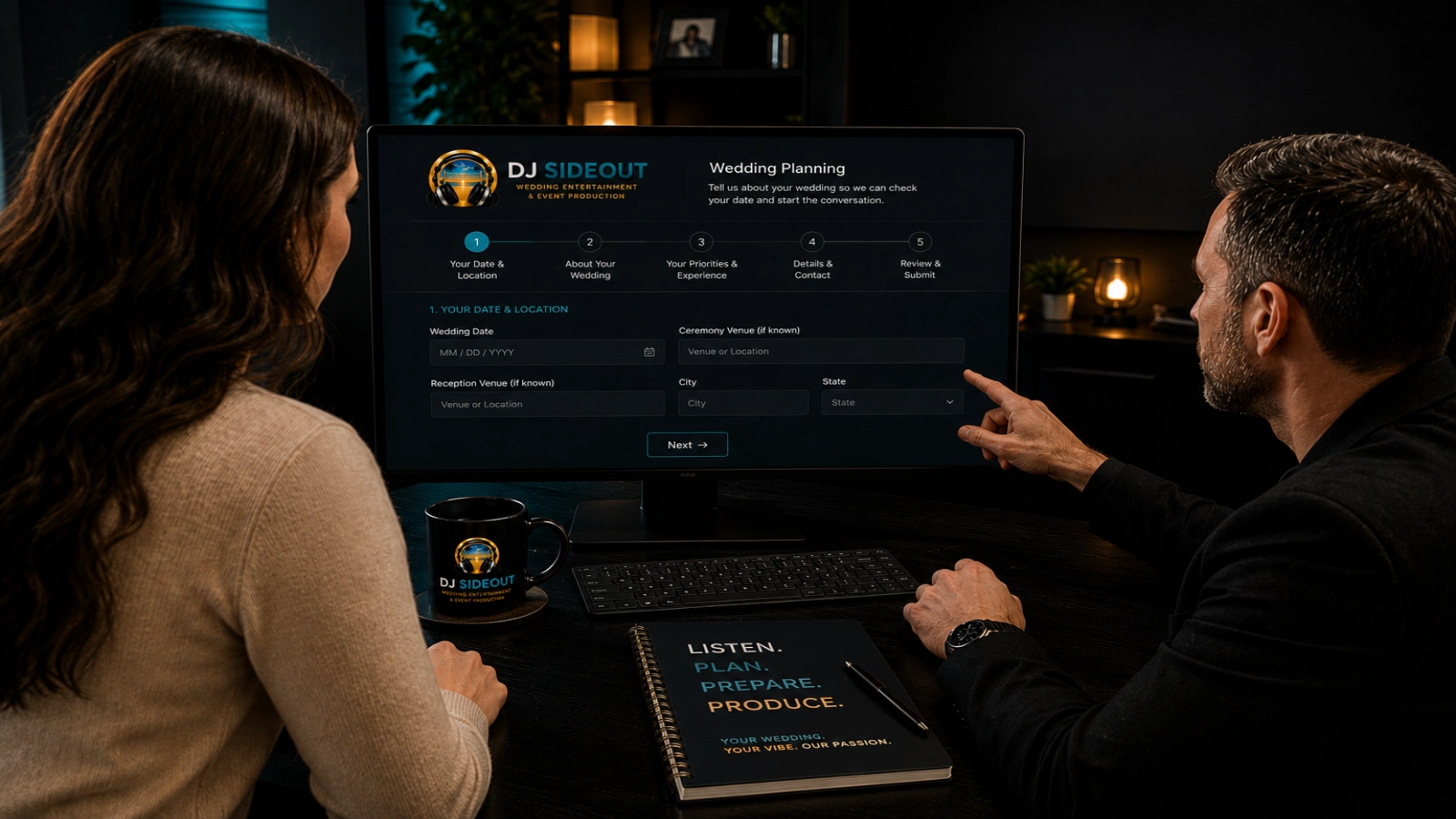
Understanding What Matters
Every wedding and event begins with different people, expectations, traditions, priorities, and reasons for gathering.
Before recommending music, interaction, lighting, audio, or production scale, we want to understand what the event should accomplish and how you want the people in the room to experience it.
That understanding becomes the foundation for the plan.
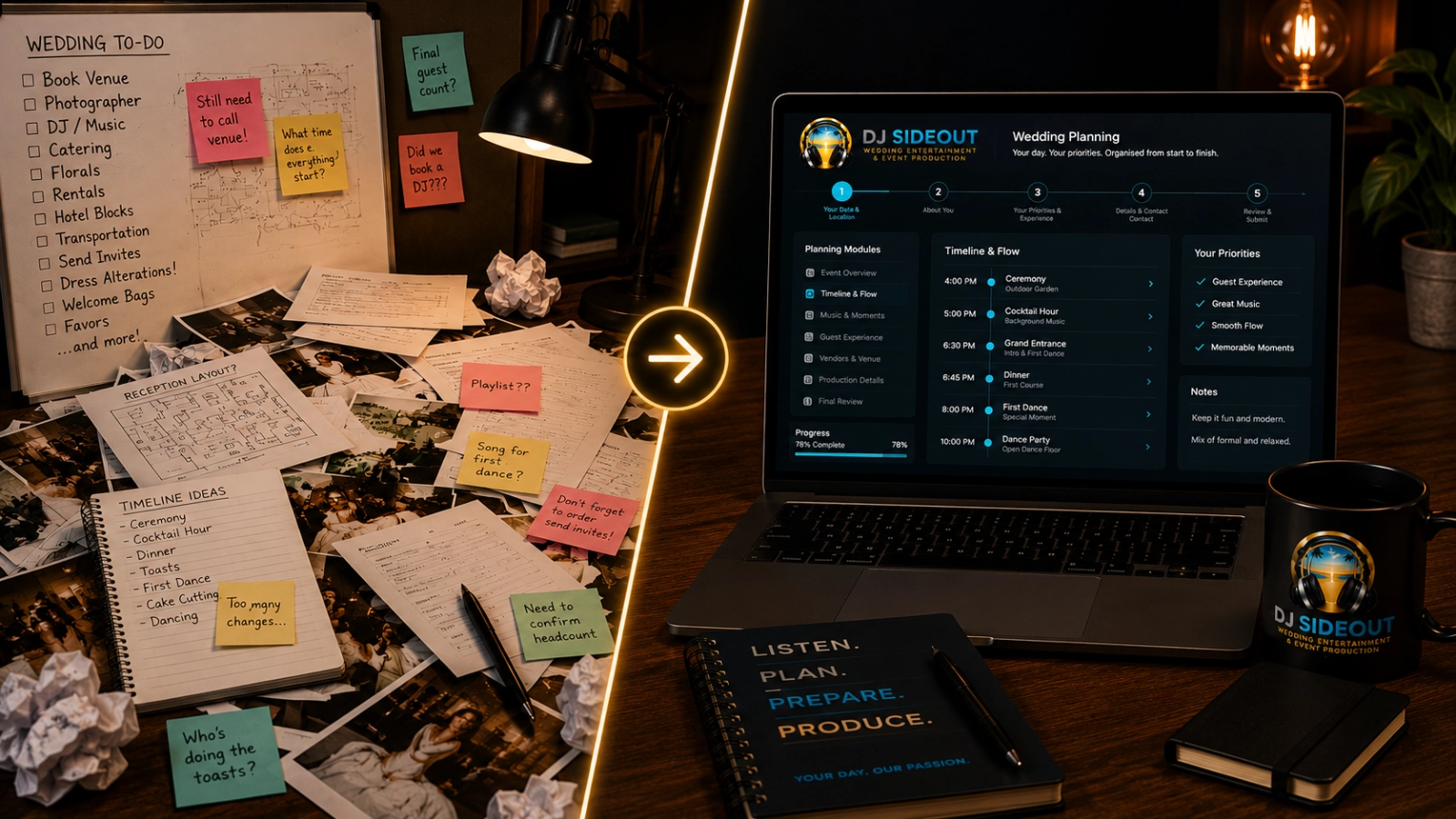
Planning Before Scheduling
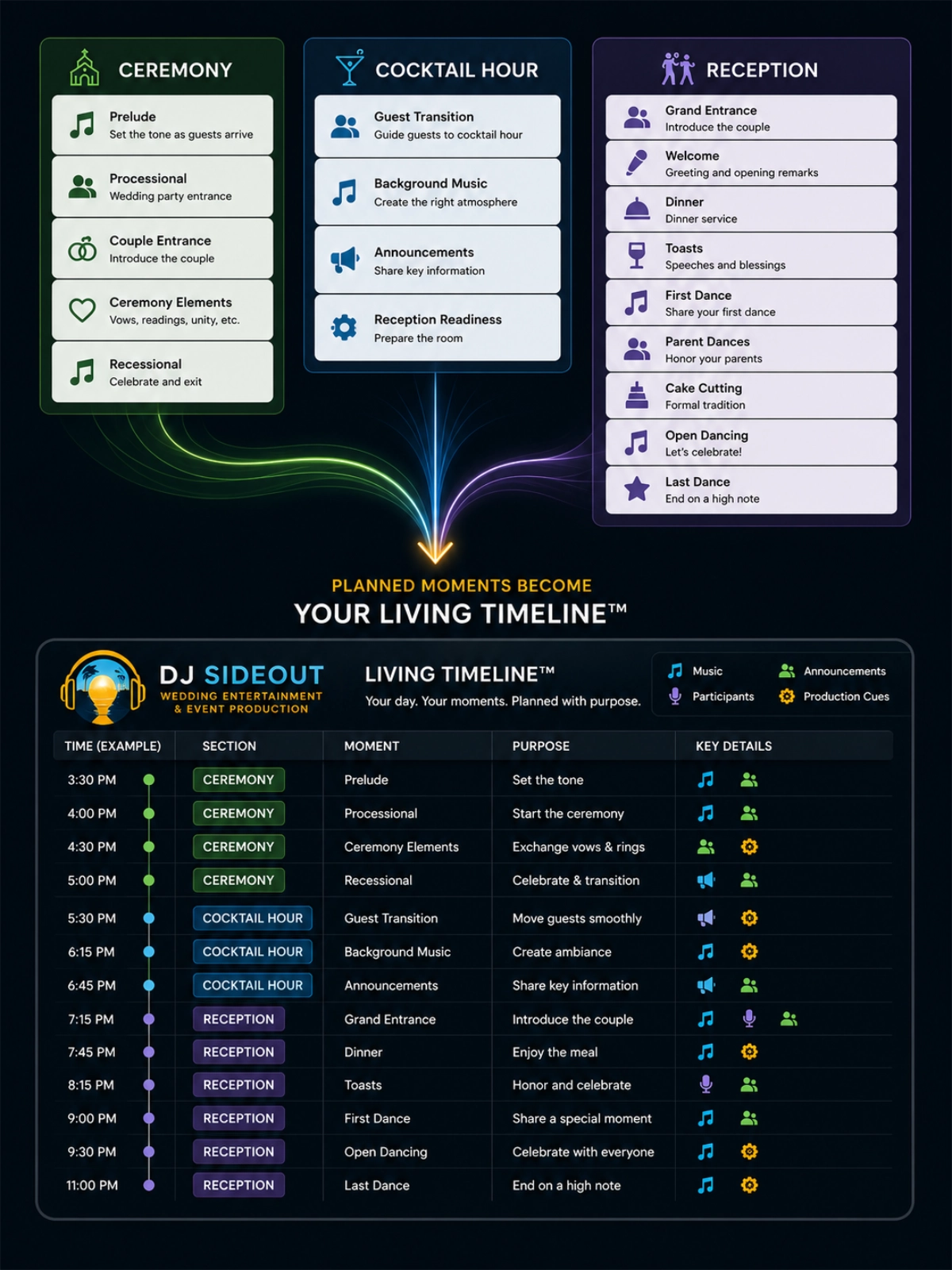
A timeline is most useful after the important moments have been understood and planned.
We first clarify what each moment is meant to accomplish, who is involved, how it should feel, and what music, communication, or production details support it.
Once those decisions are understood, the moments can be placed into an event flow that supports pacing, transitions, guest attention, and the overall experience.
This keeps the schedule from becoming a list of disconnected times and helps it become a practical production plan.
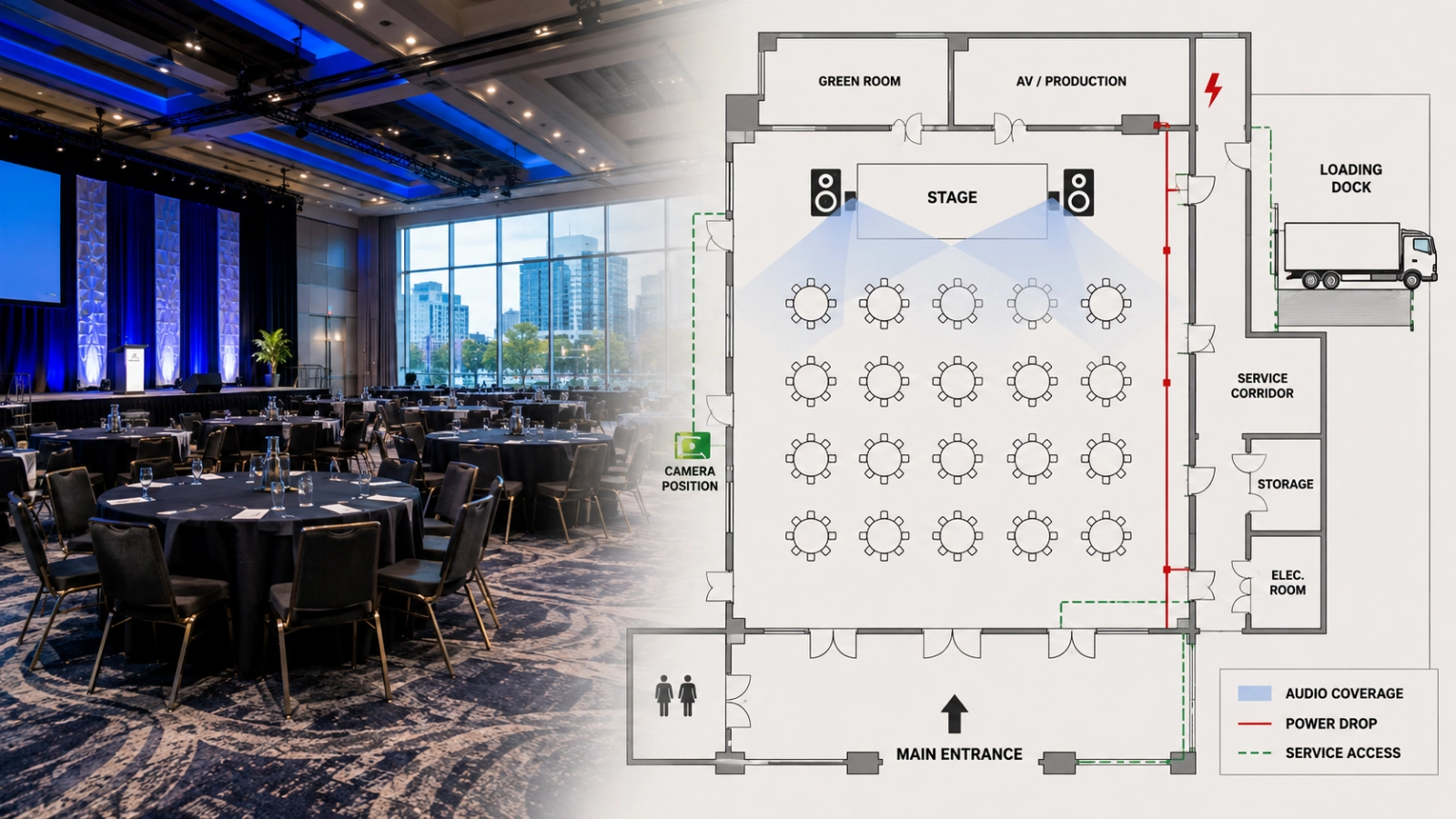
The Room Matters
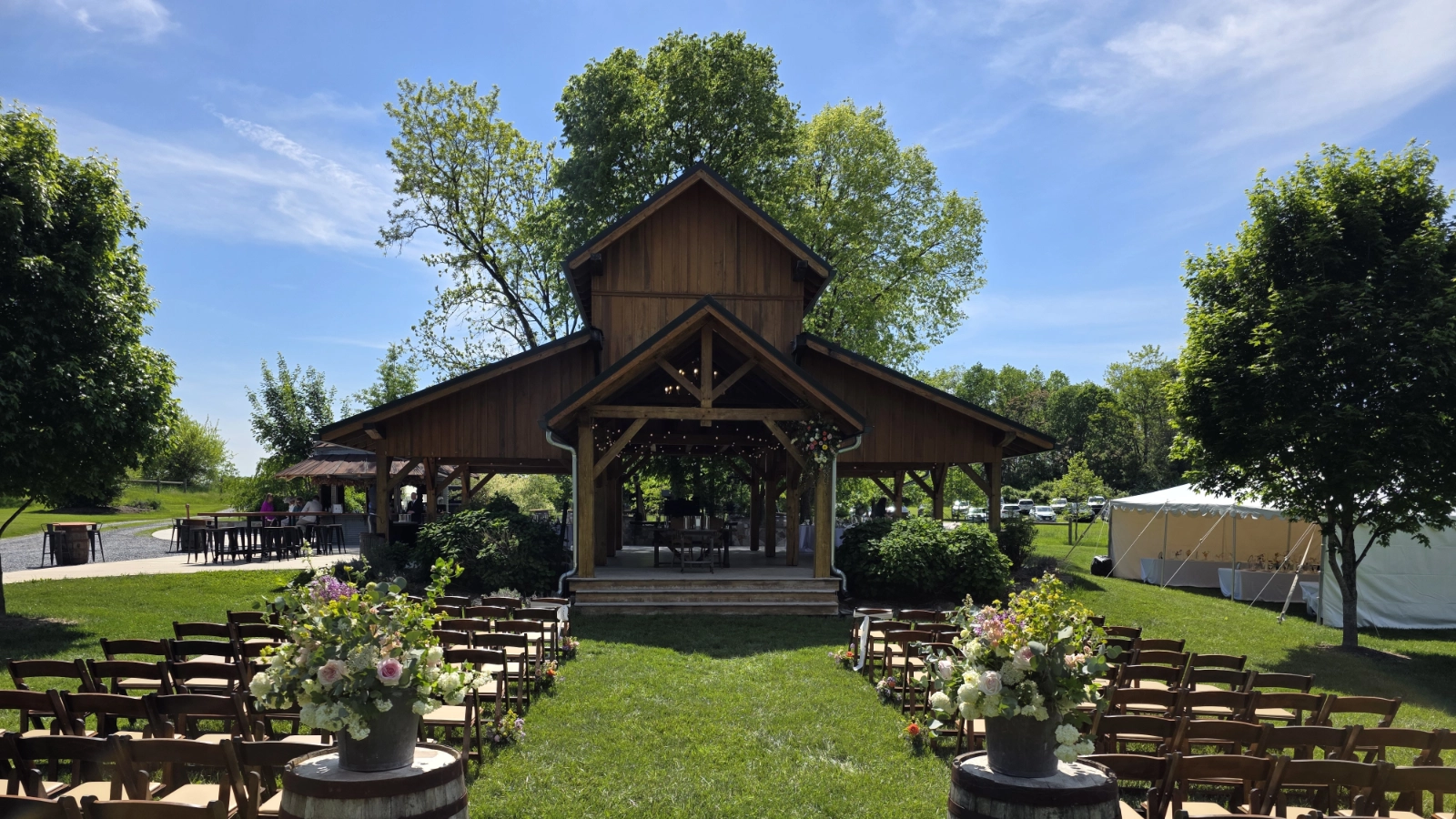
A strong plan must work inside the actual venue, with the actual audience, vendors, guest areas, access limitations, acoustics, power, weather, and production conditions.
We consider how people will enter, gather, listen, move, participate, celebrate, and transition through the event.
Understanding the environment helps us prepare production that supports the event without drawing unnecessary attention to the equipment behind it.
Energy Should Build Naturally
Great event energy develops through pacing, music, communication, participation, and attention to how the people in the room are responding.
Read the Room
Guest response, comfort, participation, and attention help guide how quickly the energy should change.
Protect the Moments
Not every transition needs maximum volume or interaction. Some moments are stronger when they remain simple and focused.
Build With Purpose
Music, lighting, announcements, and participation work together to support the natural rise of the event.
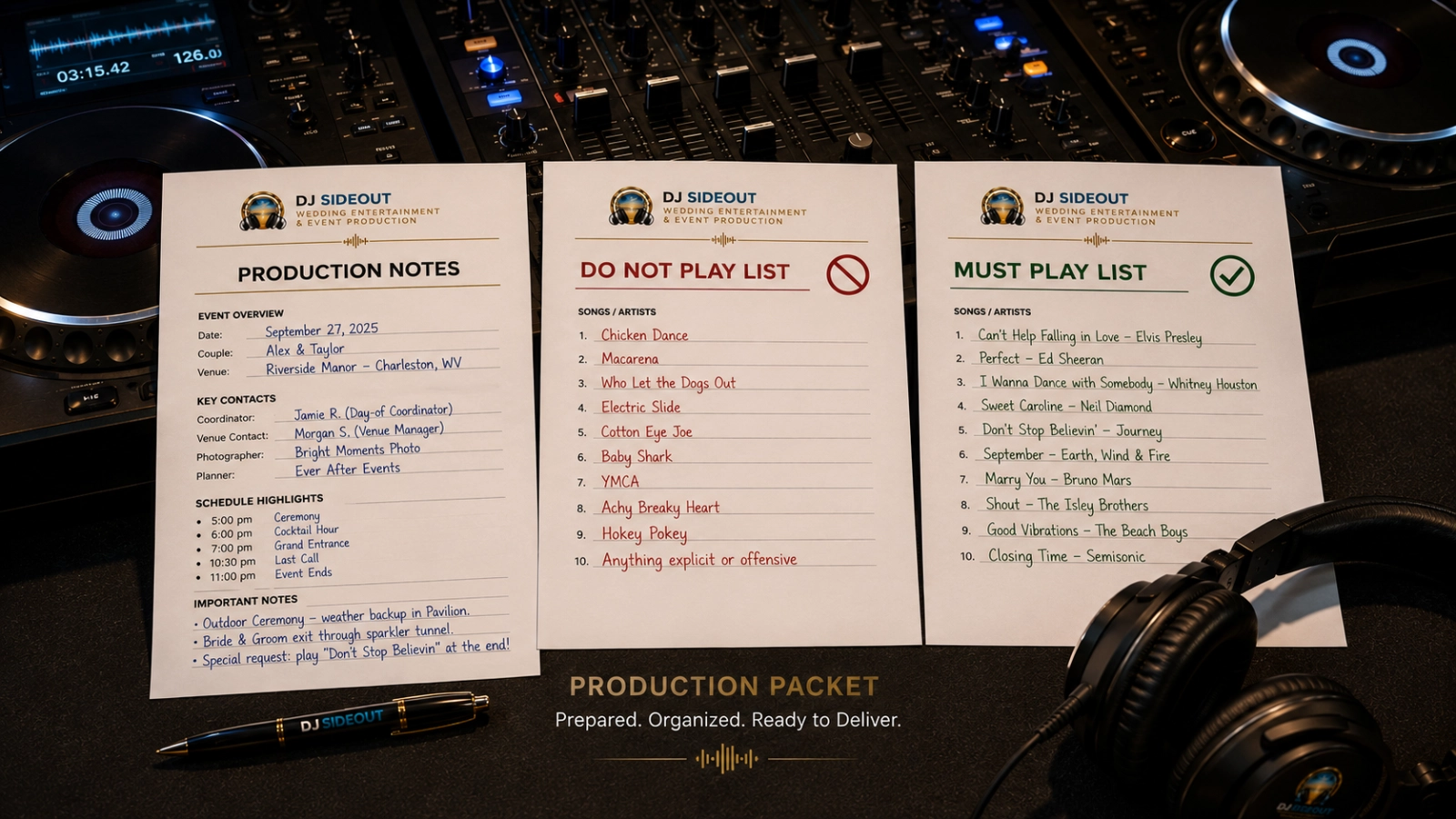
Confidence Comes From Preparation
The more thoroughly the important details are understood before the event, the more naturally the production can respond when the event is underway.
Preparation includes more than building a playlist. It includes reviewing the people, moments, venue, timing, communication, music, vendor relationships, production requirements, and possible changes that may affect the event.
That work helps reduce uncertainty, supports clear decisions, and gives us the context needed to adapt without losing sight of the experience you intended.
We Adapt in Real Time
Events change. Timing moves, weather shifts, guests respond differently, vendors need adjustments, and unexpected moments appear.
Timing
A delay or early transition can be managed more confidently when the intended experience behind each moment is already understood.
Audience
Music, interaction, pacing, and energy can change according to guest response while still respecting the approved plan.
Environment
Weather, space usage, acoustics, activity areas, and production conditions may require practical adjustments.
Coordination
Clear coordination with organizers, couples, venues, vendors, speakers, and performers helps changes remain manageable.
The Event Remains the Center
The strongest production supports the experience without constantly calling attention to itself.
We lead when guests need direction, communicate when the event needs clarity, build energy when the room is ready, and step back when the moment belongs to someone else.
The goal is not to make the DJ the center of the event. The goal is to help the people, purpose, moments, and celebration remain at the center.
What the Process Looks Like
The process stays straightforward for you while the work behind it remains thoughtful and connected.
Step One
Understand the people, purpose, priorities, space, and experience that should guide the event.
Step Two
Define the moments, music, communication, participation, and production support the event requires.
Step Three
Connect the details, review the environment, coordinate the participants, and prepare for likely changes.
Step Four
Manage the music, communication, pacing, energy, and production around the event as it actually unfolds.
Start the Conversation
You do not need to begin with a perfect plan. Start with the people, the place, the purpose, and how you want the event to feel. We’ll help you take the next step.